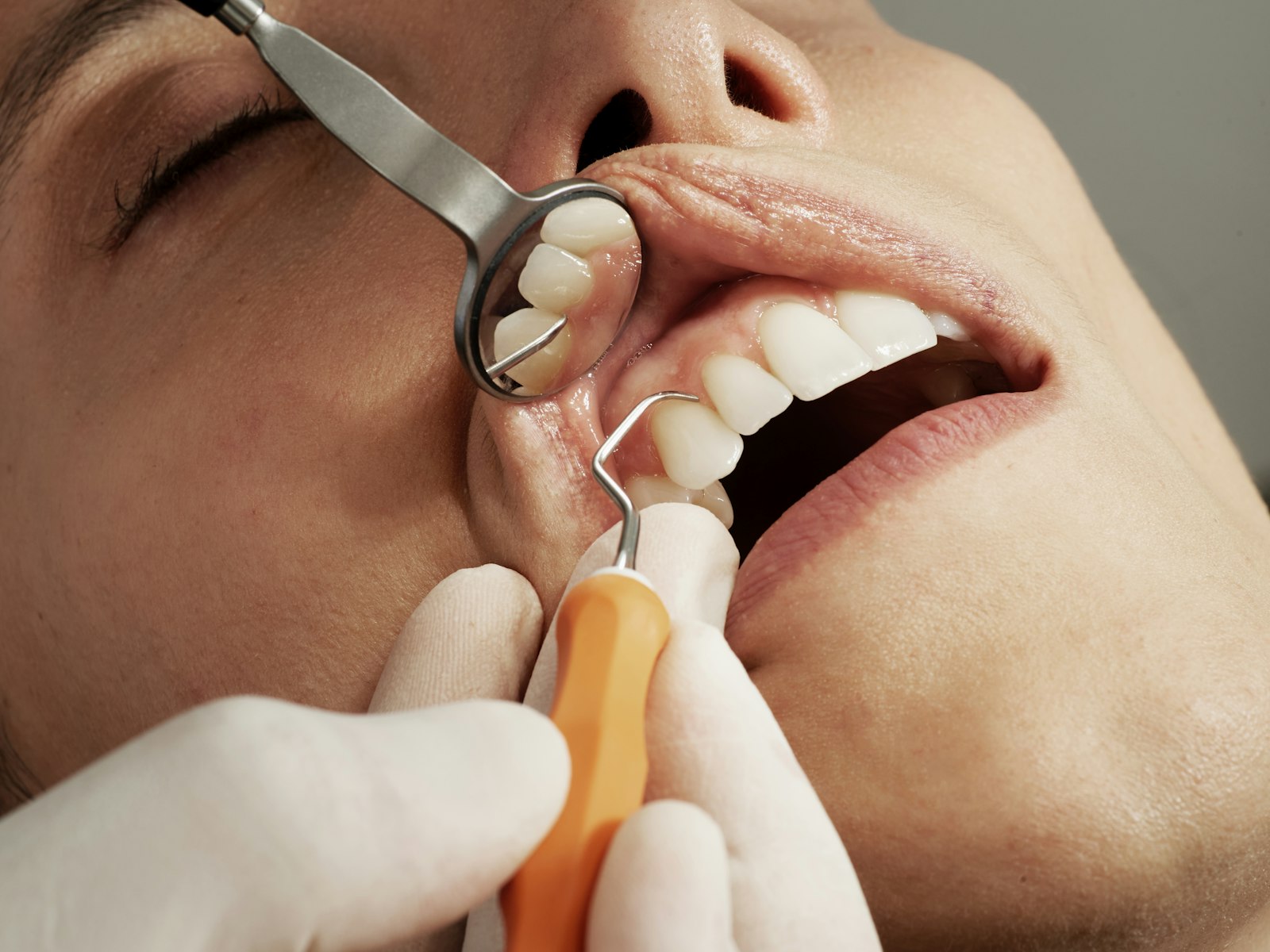
For an internationally trained dentist planning to practise abroad in 2026, five countries form the realistic shortlist: the United Kingdom, Australia, Canada, Germany, and the United States. Each has a defined regulator, a defined exam, a defined visa pathway, and a defined timeline. None of them is easy. Some are faster than the others; one is cheaper; one is closed to Iranian nationals through the end of 2026.
This is week 1 of an 8-week series. The instinct in a piece like this is to compare all five countries on every axis at once. We will do some of that — the orientation needs it. But the more useful Week 1 read is depth on the destination that changed the most in 2026 and that sits at the top of the shortlist for most readers: the United Kingdom. The side-by-side comparison comes in Week 2.
The road is real. The work is to read the map carefully, then to read the section of it that applies to you with the most attention.
"There is a path. We help you read the map." — the brand promise that anchors this series.
Part one — orientation: the five destinations at a glance
Every internationally trained dentist's career path goes through one of these five regulators. The rest is sequencing — exams, documents, language certificates, visa filings, registration. Most of the lost time on this journey happens not at the exam but in the months before it, when paperwork that could have run in parallel ran sequentially instead. We will return to that pattern in Week 4. For now, the shape of each destination.
United Kingdom — regulator General Dental Council
The UK assesses overseas-qualified dentists through the Overseas Registration Examination (ORE), a two-part exam administered under a new UCL Consultants Ltd delivery contract from August 2026 onward. Part 1 is a computer-based written exam taken in the UK. Part 2 is a clinical exam taken at UK test centres. The dominant 2026 story is the fee restructuring: Part 1 dropped 17% to £485, while Part 2 rose 65% to £6,967. Realistic end-to-end timeline is 1.5 to 3 years. The Health and Care Worker Visa keeps the visa step lightweight for dentists with an NHS or CQC-registered employer.
Australia — regulator Australian Dental Council + AHPRA
A three-stage ADC pathway: Initial Assessment, Written Exam (offered in Dubai, Istanbul, and the UAE), Practical Exam (held only in Melbourne). The 2026 wins for applicants are procedural: ADC Written Exam validity extended from 3 to 5 years, the skills assessment moved post-exam, and AHPRA English score rules refreshed in April 2026. Since January 2025, ADC accepts Iranian rasmi translations directly. Realistic timeline: 1.5 to 4 years. Total cost in nominal fees: AUD 18,000–25,000 — the lightest of the five.
Canada — regulator NDEB + provincial Dental Regulatory Authorities
The NDEB Equivalency Process is a sequential four-exam pipeline: AFK, ACJ, NDECC, and a Virtual OSCE. The 2026 development worth tracking is the BTDPC pilot (Bridge Training to Dental Practice in Canada), an 8-month program that skips NDECC for the 2026–2027 cohort but requires Canadian Permanent Residency before enrolment. Realistic timeline: 2 to 6 years on the standard NDEB route; about 8 months on BTDPC if PR is already in hand. Cost on NDEB route: CAD 35,000–65,000.
Germany — regulator 16 state Bundesländer under the federal ZApprO framework
Germany's federal Bundestag standardized the Kenntnisprüfung as the federal default for all non-EU dentists in March 2026, with a uniform 3-attempt limit nationwide. The language gate (B2 general + C1 Fachsprachprüfung Zahnmedizin) is the steepest of the five and the most predictive of timeline. Realistic range: 2 to 5 years. Cost: EUR 20,000–50,000. Germany rewards language investment more than any other destination on this list.
United States — regulator state Dental Boards (50, independent)
For non-Iranian applicants the standard route remains the IDP / Advanced Standing Program — a 2-to-3-year CODA-accredited DDS or DMD program, applied for through ADEA CAAPID. For Iranian nationals, the route is closed in 2026.
Presidential Proclamation 10998, effective January 1, 2026, suspends F-1 student visa issuance to Iranian nationals. Until the policy reverses, the US route is closed for Iranian dentists. The other four destinations — UK, Australia, Canada, Germany — remain open.
The rest of this article focuses on the UK, because the UK is the destination that changed the most in 2026, sits at or near the top of the shortlist for most readers, and remains the fastest of the four open routes for Iranian applicants.
Part two — the UK in depth
Why the UK reads first for many Iranian applicants
Three reasons sit underneath the UK's position at the top of most Iranian shortlists in 2026:
- Speed. 18 months is the optimistic floor, 2 to 3 years the typical end-to-end. That is faster than Canada (often 2 to 6 years), faster than the German language ramp from scratch (2.5 to 3 years on language alone), and faster than the US IDP track (4.5 to 6.5 years, when it is open).
- Visa friction. The Health and Care Worker Visa is the cleanest visa in the cohort: £324 application fee, full Immigration Health Surcharge exemption, conditional on an NHS or CQC-registered employer's Certificate of Sponsorship. The IHS exemption alone saves £1,035 per year per applicant across the 5-year visa term.
- No Iranian-specific barrier. Unlike PP 10998 in the US, there is no UK regulation that singles out Iranian nationals. Iranian translations are widely accepted with the standard notarisation chain, and Iranian dentists work across the NHS today.
The UK is not the cheapest of the four open destinations in 2026 — that title belongs to Australia after the March 2026 ORE Part 2 fee jump. But for applicants who value speed and visa simplicity over total cost, the trade still favours the UK.
The ORE — what it actually tests
The ORE is not a single exam; it is a two-stage filter. The two stages test different things and reward different kinds of preparation.
ORE Part 1 — the written filter
Part 1 is a computer-based multiple-choice exam at King's College London (Guy's Campus). It cannot be taken outside the UK. The architecture:
- Paper A — 3 hours, computer-based MCQ across clinically applied science and disease: anatomy, physiology, pathology, microbiology, pharmacology, oral medicine, oral pathology, general medicine relevant to dentistry.
- Paper B — 3 hours, computer-based MCQ across clinical dentistry, law, ethics, health and safety: restorative, prosthodontics, paediatric dentistry, orthodontics, periodontics, oral surgery, public health, professional regulation.
Both papers use SBA (Single Best Answer) and EMQ (Extended Matching Question) formats. Both must be passed in the same sitting or, where allowed, within the same attempt cycle. Candidates have a maximum of four Part 1 attempts in total. Results arrive in roughly 30 to 40 working days; detailed candidate feedback in about 40 working days.
Frequency in 2026: traditionally twice a year (April and August). 2025 included an additional December sitting, and the new UCL Consultants contract opened with expanded capacity — 600 seats per sitting, four sittings per year, totalling 2,400 Part 1 places in the first contract year.
ORE Part 2 — the clinical exam
Part 2 is taken in the UK across two days. It has three components, and all three must be passed.
- DTP (Diagnosis & Treatment Planning) — a written station, roughly 5 minutes per question, testing structured clinical reasoning on cases.
- OSCE — 10-minute stations with trained actors playing patients. Each station tests one or more clinical communication skills: history-taking, examination explanation, treatment-option counselling, consent, complaint handling. For Iranian candidates, the OSCE is typically where the English-language gap surfaces most sharply — not on vocabulary but on rhythm and patient-facing register.
- Manikin (Day 2) — full clinical procedures on simulated patients. Two major tasks and one minor task, on a full day. Failing any single task fails the entire Manikin section. This is the highest-failure component of the entire ORE.
Capacity under the new UCL Consultants contract: 144 to 200 places per sitting, five sittings per year — 944 Part 2 places annually in the first contract year.
From the GDC handbook: every Part 2 candidate must demonstrate clinical safety, professional judgement, and communication standards equivalent to those expected of a UK graduate at the point of registration.
The 2026 fee reset — what actually changed and why it matters
In March 2026 the GDC signed a new ORE delivery contract with UCL Consultants Ltd, with first sittings under the new contract from August 2026. The fee structure flipped sharply, and the direction of each change matters strategically.
| ORE fee item | Pre-2026 | Post-2026 | Direction |
|---|---|---|---|
| Part 1 exam fee | £584 | £485 | -17% |
| Part 2 exam fee | £4,235 | £6,967 | +65% |
| Application processing fee | £96 | £115 | +20% |
| VAT on ORE fees | not applied | applied | new |
The strategic shape: a cheaper Year-1 entry filter and a substantially more expensive Year-2 clinical exam. For most candidates the net change is materially higher — Part 2 typically dominates total spend, and the £2,732 per-attempt increase on Part 2 is the largest single fee shift across any of the five destinations we track this year.
UCL Consultants Ltd, on assuming the ORE delivery contract: the new structure reflects the actual costs of running a high-volume clinical assessment to current standards, with expanded sitting capacity to reduce booking pressure.
What this means in practice: a candidate planning a single attempt at each part now budgets roughly £7,567 just on exam-fee line items (Part 1 + Part 2 + application processing), before factoring in VAT, prep courses, materials, mocks, or travel. Building in a realistic Part 2 resit allowance — the Manikin pass rate justifies it — pushes the all-in ORE pathway cost into the £25,000 to £45,000 range, up from £15,000 to £30,000 pre-2026.
A small but useful structural change: priority access has been introduced for candidates nearing their 5-year Part 2 limit, and for refugee status applicants. Iranian candidates holding refugee status in a third country may want to confirm eligibility for the priority booking lane.
The Part 1 booking problem
Across two years of Iranian-dentist community discussion (roughly 3,560 messages, archived in the RxApply knowledge base), one operational problem recurs more often than any other: Part 1 seats sell out within seconds of opening. This is not exaggeration. Community-tested tactics — UK university internet via eduroam Wi-Fi, wired LAN connections, low ping, refresh 3 to 4 seconds before the booking window opens — improve odds but guarantee nothing. Iranian fibre speeds of around 100 Mbps are typically insufficient against UK candidates on 700+ Mbps domestic connections.
The expanded UCL Consultants capacity (2,400 seats per year, up from a tighter pre-2026 figure) is the structural fix, but the booking experience is unlikely to feel comfortable in the first 2026 sittings.
Documents — the unglamorous step that determines everything
The GDC's document set is short — six items — but each has specific stamping and translation requirements that the community has learned through trial and error.
The six required documents:
- Dental degree (copy) — translation required, notarisation required. The original is never required by the GDC. Keep the original — degree release in Iran can require collateral.
- Official translation of degree — produced in Iran via the standard chain: Ministry of Health "قابل ترجمه" (qabel-e tarjome) stamp first, then dar-al-tarjome with translator stamp, then Ministry of Justice stamp, then notary or solicitor stamp on top.
- Passport (copy) — notarisation required.
- ENIC statement (formerly NARIC) — e-statement PDF is accepted; physical copy by post is not required. Apply at the ENIC portal; upload the degree, transcript, and up to four supporting documents. Use the award year, not the graduation year, on the application form.
- Transcript / ریز نمرات — used only for the ENIC submission, not for the GDC directly. A 2023 transcript is fine and does not need updating.
- IELTS Academic certificate — printout of the online result is sufficient. Do not submit the GDC document package without IELTS in hand. This is the single most common rejection cause in the community archive.
Translation rules — the four most common rejection causes:
- Translator stamp alone, with no notary or solicitor stamp on top — rejected.
- Persian-only "برابر اصل" certified-copy stamp — rejected. The stamp must be the Latin "certified true copy" form.
- ENIC application missing the transcript — caseworker rejection.
- Submitting documents before having the IELTS result — caseworker rejection.
Notarisation paths:
- In Iran — acceptable to the GDC. Recommended Tehran offices include the Rastak Motahhari branch and Abiz. Stamp must be Latin "certified true copy." Costs are well below UK pricing.
- In the UK — solicitor or notary public, £15 to £50 at a local notary, around £100 at inotary or a comparable named service. Usually same-day; some give appointments.
Apostille — typically not required for GDC. Community experts have not done apostille and the practical working route is solicitor or notary certified copy plus official translation. Iran is not a Hague Apostille Convention signatory, so if a future change makes apostille required, the fallback is consular legalisation through the UK embassy (or via Istanbul if Tehran VFS is closed).
IELTS — the language gate
The GDC requires IELTS Academic 7.0 overall with 6.5 minimum in each sub-skill. OET, TOEFL, and Home Edition IELTS are not accepted. The 7.0 overall alone is not enough; the 6.5 sub-skill floor catches a meaningful number of otherwise-qualified candidates each cycle.
One narrow exemption exists: candidates whose entire dental qualification (5 to 6 years) was taught and examined in English, and who graduated less than 2 years ago. A partial English transcript is not enough. The ORE is still required regardless.
Visa — the Health and Care Worker pathway
For dentists with an NHS or CQC-registered employer's Certificate of Sponsorship, the Health and Care Worker Visa is the cleanest visa in the cohort:
- Application fee: £324 (compared with £719 to £1,420 on the Skilled Worker Visa).
- Immigration Health Surcharge: exempt (saving £1,035 per year for the 5-year visa term — approximately £5,175 across the term).
- Conditional on: Certificate of Sponsorship from an NHS or CQC-registered employer.
Other visa categories remain available: Skilled Worker, Student (for the Master's intake route), Graduate (post-Master's 2-year), and Standard Visitor (short-term, risky for ORE planning given the 6-month maximum). UK visa fees increased 6.5% on 8 April 2026 — modest, across all categories.
A specific structural note for Iranian applicants: VFS Tehran has been closed temporarily through recent cycles. Istanbul VFS accepts UK visa submissions; translations and notarisation can be completed in Iran, with the biometric and submission step done in Istanbul.
Registration with the GDC and the first job
Passing Part 2 is not the end. The post-pass sequence:
- GDC application — submit the full overseas-application package to the GDC, with all six documents and the ORE pass evidence. Track via the mygdc portal. Processing time is variable.
- DFT or PLVE — Dental Foundation Training (the standard one-year supervised programme), or PLVE (Performer-List Validation by Experience) for candidates with existing UK clinical exposure.
- Performer Number — issued by NHS BSA; required to provide NHS dental services.
- Indemnity — professional indemnity insurance, mandatory before any clinical practice.
- NHS contract — typically through an NHS principal or a corporate provider.
For most candidates the GDC application to first stable job sits in a 6-to-9-month window after Part 2 pass, contingent on DFT timing and employer offers.
A representative scenario
A 32-year-old Iranian dentist with 4 years of post-graduation clinical experience, an IELTS score of 7.5 overall (6.5 minimum across sub-skills) achieved in month 4, and the document chain completed in month 6. She sits Part 1 in month 8, passes on the first attempt, and books Part 2 for month 14. She passes the OSCE and DTP on first attempt but the Manikin section requires a resit in month 18. GDC registration follows in month 20. She begins DFT in month 24. Total elapsed time from start of preparation to first stable NHS post: 28 months. Total spend including one Part 2 resit, prep courses, mocks, instruments, translations, and visa: approximately £32,000.
The numbers in this scenario are constructed for illustration; the structure of the journey mirrors what the community archive shows as a common but not guaranteed shape. Some candidates clear both parts on first attempt and shorten by 4 to 6 months. Some take an additional Part 1 attempt and lengthen by 6 to 12 months. The Manikin section is where the variance concentrates.
Part three — what comes in Week 2
This article concentrated on the UK because that is where the most material change happened in 2026 and where the largest cohort of readers will start. Week 2 puts all five destinations side-by-side on the four axes that actually determine fit:
- Speed — months from start to first stable job, with realistic variance.
- Cost — total all-in cost in USD-equivalent, including prep, exams, materials, translations, visa, travel.
- Language barrier — measured not by exam name but by months of preparation typically required at the candidate's starting proficiency.
- Visa friction — fees, processing time, success rate, and Iranian-specific factors.
Week 3 builds the decision tree from those four axes. Weeks 4 through 7 walk through the operational reality: documents, exams, visas, landing. Week 8 closes with the 10-year horizon — specialty training, practice ownership, and citizenship timelines per destination.
For ongoing updates, follow the RxApply channels on Telegram, Instagram, X, LinkedIn, and Facebook. The weekly newsletter carries the synthesis.
There is a path. We help you read the map.
Sources
External regulatory sources:
- General Dental Council UK — gdc-uk.org
- ENIC (formerly NARIC) — enic.org.uk
- NHS BSA Performer List — nhsbsa.nhs.uk
- Australian Dental Council — adc.org.au
- National Dental Examining Board of Canada — ndeb-bned.ca
- Bundeszahnärztekammer — bzaek.de
- ADEA CAAPID — caapid.adea.org